

News
How Drug Allocations Vanish Between Budgets and PHCs in Kano


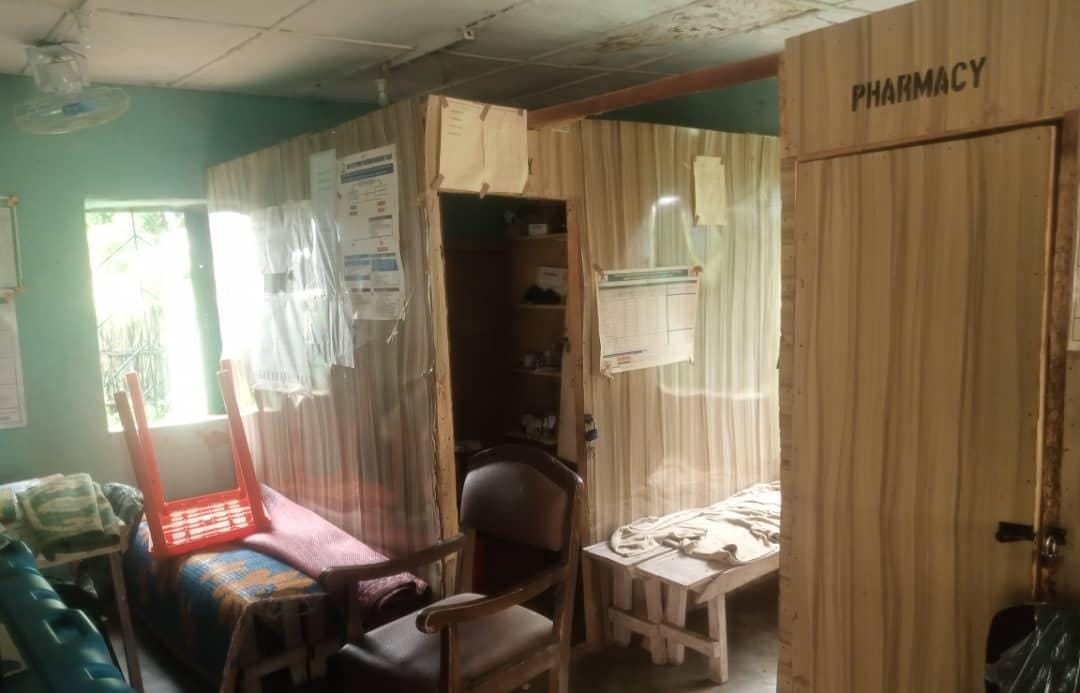
Despite record funding for Nigeria’s Basic Health Care Provision Fund, many primary health centres in Kano remain bare and under-resourced, leaving families to pay for medicines the government already financed.
Muhammad Sani Uba reports.
Kano
The wooden shelves inside Tshohuwar Rogo Primary Healthcare Centre (PHC) in Rogo Local Government Area (LGA), tell a silent story. A few dusty boxes of Augmentin and paracetamol sit beside syringes and empty cartons. They are the remnants of a pharmacy that once served its purpose.


Seven years after Nigeria launched the Basic Health Care Provision Fund (BHCPF) to guarantee essential medicines and affordable healthcare, residents in rural Kano communities still face an old reality of insufficient drugs, poor infrastructure and out of pocket expenses for patients that keep soaring high.
Khadija Auwal, a mother of three, has grown used to walking home from her PHC in Tshohuwar Rogo with prescriptions instead of medicine.
“The hospital is working, but we hardly get essential drugs,” she says, sitting under a neem tree outside the health centre, clutching a small nylon bag of medicines bought from a nearby chemist.
“It pains us whenever we have to buy drugs outside. They are expensive here, but what other option do we have?”
When she cannot afford the full dose of the required medications, Khadija resorts to local herbs.
“Sometimes I just buy what I can and use herbs to manage the rest,” she said.
Across many villages visited by this reporter in Rogo and Gari LGAs) Khadija’s story is a familiar one. The Basic Health Care Provision Fund promised free and accessible healthcare to vulnerable Nigerians but it has given way to a deepening crisis of drug scarcity. Families are forced to now pay out of pocket for medicines that public funds were meant to provide or subsidise.
One of them is Maryam Musa, a pregnant mother, also in Tshohuwar Rogo community, Rogo LGA, who sold her goats to buy malaria drugs.
“I came to the PHC at dawn as I was feeling feverish and was suspecting malaria. But there were no malaria drugs in the facility, the doctor only prescribed some drugs for me to buy.”
Maryam’s husband rushed to the nearest chemist, nearly seven kilometres away, where he spent ₦4,800 on drugs the PHC should have had in stock.
“We had no cash that morning,” she says, “so we sold one of our goats to pay for the drugs.”
It was a desperate choice between her life and her unborn child.
“Women die here because of small things like medicines and equipment. These things can be avoided if our PHC worked like it should.”
The National Primary Health Care Development Agency (NPHCDA) outline minimum standards that every Primary Health Care Centre (PHC) is expected to meet. These standards cover the basic requirements for staffing, infrastructure, essential services and utilities.
According to the NPHCDA, standard PHCs should have consulting rooms, a reception and waiting area, a delivery room, a lying-in ward, an injection and dressing area, a pharmacy or dispensary, records section, stores and gender-segregated toilets. Facilities are also expected to have a functional water source, electricity supply with alternative backup, waste-disposal systems, perimeter fencing and staff accommodation to support round-the-clock service delivery.
Despite these national benchmarks, many PHCs in Kano still fall short of the minimum standards required for effective primary healthcare.
Lurwan Hassan, Tshohuwar Rogo PHC, Ward Development Committee (WDC), expressed his concerns over the Basic Healthcare Provision Fund (BHCPF).
He said that while funds are sent monthly for capitation, essential drugs and other hospital services remain insufficient.
“Whenever we inquire, the health workers tell us that the money is not enough,” Hassan explained.
He added that the primary healthcare center faces numerous challenges, including shortages of drugs, inadequate infrastructure, and the need for extensive renovations. “If these issues are addressed, women in our community wouldn’t have to travel all the way to the general hospital. They could access necessary drugs and services right here at the PHC,” Hassan emphasized.
Funds released, shelves still empty
The Officer-in-Charge (OIC) of Rogo PHC, Rogo LGA, Ibrahim Yakubu, does not deny the crisis. He admits that while the facility receives funding through the BHCPF, it is far from enough to sustain operations.
“From July to September, there was no release of funds until October,” he says. “Two years ago, we used to receive around ₦1 million, but now it has dropped to between ₦600,000 and ₦700,000. I asked why, but till today, there’s no feedback.”
Yakubu explains that what comes in is barely sufficient to keep the health centre running.
“Most of the money goes into maintaining the building or buying small supplies. There’s little left for drugs,” he says, glancing toward the nearly empty dispensary.
Outside the facility, the Village Head, Mustapha Lawal, shakes his head as he walks around the PHC’s premises.
“Our PHC is in great trouble,” he mutters.
“There is no equipment, no drugs, and the management is poor. We spend at least ₦2,000 every time someone falls sick, just to buy medicines from chemists. Many people have died because we lack emergency drugs.”
That frustration is shared in other parts of Rogo. At Liman PHC, a cramped room serves as the pharmacy. The shelves are nearly empty, cluttered with paperwork and half-used bottles instead of medicines.
The Officer-in-Charge, Anas Shazali Garba, insists that funds do come in regularly.
He said the facility is paid ₦453,720 every month for drugs and ₦300,750 quarterly for renovations. But the visible stock hardly reflects those figures.
When asked why, he replies quietly, “We will buy the drugs soon.”
But for residents like Yusuf Ibrahim, a 45-year-old maize farmer in Liman ward, those promises mean little. For him, illness is no longer just a health concern; it has become an economic crisis and stocking up the appropriate medicines should be treated with urgency.
“Every time I fall sick, I go to the PHC first but there are no drugs, only prescriptions.”
He said each episode forces him to spend between ₦1,500 and ₦3,000 at private chemists, money that should go to the purchase of seeds or fertilizer.
“Last year, I missed two weeks of farming because I couldn’t afford full treatment. Due to this, I lost most of my crops and ran at a loss,” he said.
Yusuf says he now keeps a small box of leftover malaria drugs at home, rationing them for emergencies.
“We shouldn’t have to buy what the government has already paid for,” he said.
Where Did ₦425,790 Go?
At Yandadi PHC in Kunchi, LGA, the situation is no different. Records show that the facility received ₦425,790 on October 6, 2025, for drug procurement. Yet, a visit to the centre reveals only a few cartons of syringes, paracetamol, and generic antibiotics stacked inside torn boxes.
The value of the visible drugs does not appear to justify the amount reportedly spent, raising concerns about inflated procurement costs or possible diversion of funds. A health worker who spoke off-record expressed concern over the lack of accountability in the disbursement process.
“There is no proper tracking. Once the funds hit the accounts, there’s no effective monitoring of what is bought or delivered. Some people use the money for personal things, and nobody checks,” the health worker said.
In Yandadi town, Kunchi LGA, Hauwa Bello, a widow with four children, recalled an emergency when she struggled to keep her youngest daughter alive.
“It was about two years ago that my girl, Safiya, was suffering from vomiting and diarrhea.
When we went to the PHC, she was given Limotil and O.R.S, some injections were written for us to buy from the chemist.
“I went to the chemist and everything was totaling almost N7,500, which I don’t have. I believe these basic medications ought to be available in the hospital for free or even subsidized. So, I bought a few that I could afford from the chemist and returned back home without getting the injections.”
Hauwa said she earns less than ₦3,000 daily selling bean cakes.
“Sometimes I give Safiya only half the dose or skip days. The nurses are kind, but they say they don’t have the drugs. What can they do? The government says healthcare is free, but we are the ones paying the price,” she said.
Abubakar Haruna, the Ward Development Committee (WDC) chairman of Yandadi Primary Health Centre has expressed deep concern over the persistent shortage of essential drugs at the facility.
Speaking during an interview, he explained that community members arrive at the clinic hoping to receive care, only to be told to buy basic medicines elsewhere.
According to him, this situation discourages people from visiting the health centre and weakens trust in the healthcare system.
He noted that the problem has continued despite regular allocation of funds meant to support primary health services.
“Every month, we hear that money has been sent, but when you come to the PHC, you don’t see the impact,” he said.
The chairman explained that patients still struggle to access routine medication, while critical supplies remain unavailable.
The WDC chairman also raised questions about how the funds are being managed.
He stressed that there is little transparency around spending and said the community is rarely given reports or explanations. “We ask where the money goes, and the answer is always that it is not enough but nobody shows us accounts or records,” he added.
He emphasized that accountability is important not only for the government, but also for health workers and committees responsible for managing the facility.
According to him, proper monitoring, clear records, and community involvement would help ensure that every naira is used for its intended purpose. He warned that without transparency, the problems facing the PHC will only continue.
At Shuwaki, Rogo LGA, 31-year-old Abubakar Rabiu sits beneath a mango tree, recovering from typhoid fever. He is a security guard earning ₦25,000 a month. He says the illness wiped out nearly half his salary.
“The doctor gave me a prescription, but the drugs weren’t available. I went to a private pharmacy and spent ₦12,600 on treatment. I had to borrow money from a colleague and delayed paying my child’s school fees for me to be able to treat myself. In reality, our healthcare is just talk.”
Kano’s healthcare expenditure vs service reality
Between 2020 and 2025, Kano State consistently allocated significant portions of its annual budget to the health sector, but implementation has lagged, undermining real improvements in care.
For example, in 2024, the Ministry of Health’s original budget was about ₦8.3bn, but by the third quarter of the year roughly 32.5% of that amount had been spent.
In the 2025 Kano State budget, the state primary healthcare board was allocated ₦10.75bn, yet only only ₦72.99m representing 0.7% had been spent by the first quarter.
Independent fiscal analysis by BudgIT shows that between 2021 and early 2024, Kano State executed less than 20% of its approved health budget on average.
The mismatch between what is budgeted and what is actually spent has serious consequences. Many primary healthcare centres remain under-equipped and understaffed, forcing patients in vulnerable communities especially in rural areas to go without care.
A Promise Betrayed
Created under Section 11 of the National Health Act, the Basic Health Care Provision Fund is meant to push money down to the primary health-care level, paying for essential drugs, basic upgrades and frontline services. The releases are not automatic, but where facilities are accredited, the fund is designed to ease the cost of care and cut the crippling out-of-pocket spending that pushes many, especially in rural areas, away from the health system.
In 2024 alone, the federal government disbursed around ₦45.4bn under the BHCPF. Kano State was among the largest individual beneficiaries, receiving approximately ₦2.67bn of the total.
Yet, five years into implementation, the results tell a different story.
A study of selected primary health centres in Kano found deep structural problems. Nearly two-thirds of facilities surveyed reported delays in receiving funds, close to nine in ten operate with poor infrastructure, and more than half struggle with weak financial oversight and accountability.
Despite the steady inflow of BHCPF allocations, many PHCs across Kano still lack essential medicines, basic equipment, and adequate staffing. In places like Rogo, the absence of drugs has turned what should be a life-saving facility into a referral point for private chemists.
Experts argue that these gaps point to persistent problems of transparency and accountability in how funds are managed.
Although the BHCPF now incorporates a digital tracking platform to improve monitoring, its impact will depend entirely on how strictly it is enforced at the facility level
“The problem is not funding; it is what happens after the money is released. Without community monitoring and public disclosure of spending, corruption will always find a way,” says Kabiru Sabo, a health policy researcher at
Bayero University Kano.
Gali Sule, a pharmacist and Director-General of Kano State Drugs & Medical Consumables Supply Agency (KDMCSA), offered a contrasting view. He noted that drug availability in public health facilities has improved significantly in recent years. He attributed earlier shortages to diversion by staff.
“Some workers get drugs cheaply but direct them outside for personal gain. We have strong monitoring now, and anyone caught will face the law.”
Sule highlighted ongoing reforms, including the establishment of a pharma-grade warehouse, direct procurement from registered suppliers, and the expansion of the Drug Revolving Fund (DRF), which is designed to strengthen accountability, ensure cost recovery, and guarantee drug quality across the state.
Dr. Ibrahim Rayyahi, public health advocate, noted structural challenges. He said, “PHCs are under local governments that lack financial autonomy. Weak governance and limited community oversight make stock management difficult.”
He recommended financial empowerment of PHCs, expanded DRF coverage, stronger community monitoring, and staff training to curb leakages.
Together, their insights emphasize that improving drug availability in Kano’s PHCs requires both systemic reforms and strict accountability.
Also, Omoniyi Adewoye, Program Manager, of Resource Centre for Human Rights and Civic Education (CHRICED) highlighted that the possible reason for this unfortunate development is diversion of funds or even drug supplies by government officials or health workers at the facility level. An issue, that the DG, Drugs Supply Agency alluded to.
“We have consistently advocated for strict monitoring of funds allocated for the healthcare sector in the state. While the state government deserves some commendation for scaling up financial allocation to the healthcare sector in recent times, it is disturbing that there is still acute shortage of drugs in our PHCs.
“The government and Civil Society Organizations need to do more in tracking these funds to ensure that the funds released are used for the specific purposes they were allocated for.
The Kano State Ministry of Health and all its relevant agencies need to urgently activate functional tracking and monitoring mechanisms to track funds released and ensure that any official or health worker found culpable is prosecuted.”
Kano’s primary healthcare board reacts
Nura Sharif, a Program Officer at the Kano State Primary Healthcare Management Board (KSPHMB), explained that the funds were allocated on a facility-by-facility basis, with each of the 484 eligible PHCs receiving ₦300,750 per quarter, totaling ₦601,500 for the first and second quarters of 2025.
He added that facilities also received capitation payments of ₦570 per enrollee from the Kano State Contributory Health Management Authority (KSCHMA), which is responsible for covering patients registered under the state insurance scheme.
Despite these allocations, Sharif said late disbursements continue to undermine operations. According to him, the National Primary Healthcare Development Agency did not release funds for first and second quarters for 2025 until August 18. This delay, he says, disrupted service delivery across PHC facilities in the state.
FOIA Request Ignored by Kano Ministry of Health
A Freedom of Information Act (FOIA) request was sent on November 4 to the Kano State Ministry of Health, seeking clarification on how funds from the Basic Health Care Provision Fund (BHCPF) have been managed and disbursed to select PHCs in Rogo and Ghari LGAs.
The request specifically asked for records of allocations and expenditures for Tshohuwar Rogo, Liman and Yandadi PHCs, including details showing how much was released for drug procurement, facility maintenance and staff welfare.
It also requested invoices for drugs purchased, names of suppliers, as well as monitoring, audit and disciplinary reports relating to the facilities.
The FOIA application was submitted in line with Sections 1, 2 and 4 of the Freedom of Information Act, which guarantees citizens access to public records and requires government institutions to respond within seven days.
However, despite the legal requirement and follow-up efforts, the ministry failed to provide any response to the request and it did not transfer the application to any other relevant agency as required under Section 5(1) of the Act.
The lack of response raises further questions about transparency in the management of BHCPF resources, particularly in communities where residents continue to report persistent drug shortages and underfunded health facilities.
This report was made possible with support from the International Centre for Investigative Reporting (ICIR) under the Strengthening Public Accountability for Results and Knowledge (SPARK 2.2) project.
You must be logged in to post a comment Login